The most common kitchen renovation mistakes and how to avoid them
The most common kitchen renovation mistakes and how to avoid them
A kitchen renovation is one of the most significant investments you can make in your home. The decisions made during planning determine how well the space performs for years, not just how it looks on completion day.
Even well-intentioned renovations fall short when common errors go unaddressed. Understanding where projects typically go wrong puts you in a stronger position before any work begins.
Prioritising appearance over workflow
The most frequently cited renovation regret is a kitchen that looks impressive but is difficult to use. Visual appeal matters, but it should never override the practical requirements of how the space functions day to day.
Workflow depends on the relationship between your preparation area, cooking zone and cleaning station. When these are poorly positioned relative to each other, the kitchen demands more effort regardless of how well it is finished.
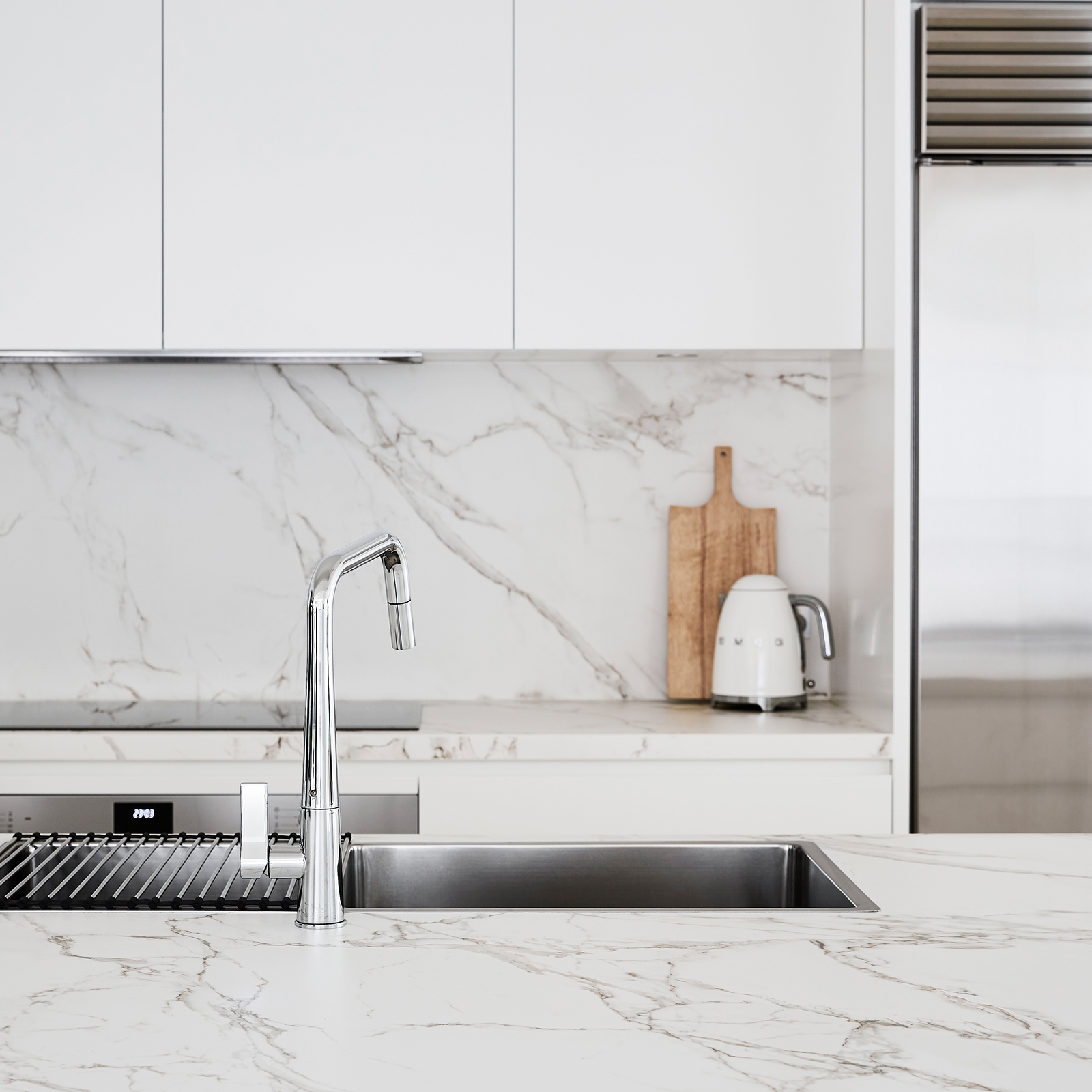
A well-positioned sink is central to this balance. Abey’s kitchen sink range includes designs suited to different layouts and workflows, from large single bowl formats that support continuous preparation to double configurations that allow simultaneous washing and rinsing.
Underestimating how much the sink matters
The sink receives more daily use than almost any other fixture. Choosing one based on appearance alone, without considering size, depth and material, is one of the most costly mistakes renovators make.
Stainless steel options such as the Kiruna Extra Large Single Bowl Day provide the durability high-use kitchens require. For those who prefer a more architectural material, the Chambord Clotaire Large Double Bowl Fireclay combines practical functionality with a refined visual character. Abey’s guide to classic kitchen sink materials covers the key trade-offs in detail.
Choosing tapware without a finish strategy
Tapware chosen in isolation frequently clashes with the materials and finishes already established elsewhere. Consistency begins with establishing a finish direction early, whether brushed nickel, matte black, chrome or stainless steel, and applying it throughout every space from the beginning.
A kitchen mixer such as the Lucia Side Lever Sink Mixer is available in finishes that carry through to bathroom and laundry tapware, creating a home that feels deliberately designed rather than assembled from unrelated choices.
Tapware finish is one of the few decisions that is genuinely difficult to correct after a renovation is complete. Making it deliberately and early, with the whole home in view, costs nothing extra.
Overlooking storage in the planning phase
Storage is most effective when planned before cabinets are designed, not after. Renovators who treat it as secondary find the finished kitchen difficult to keep organised regardless of how well it looks.
Pots and pans used daily should sit within reach of the cooktop. Cleaning supplies belong near the sink. Abey’s overview of nine ways to increase your kitchen’s storage covers zone-planning approaches that are far easier to implement during design than to correct afterward.
Selecting materials that can’t sustain daily use
Kitchens are demanding environments. Materials chosen for visual trends rather than performance frequently degrade before their time under the weight of heat, moisture, impact and daily cleaning.
Stainless steel remains the benchmark for durability. Options within Abey’s kitchen mixer range are engineered to perform reliably under these conditions, combining long-term resilience with considered design.
Treating the renovation as a short-term decision
The most enduring renovations are built with a long-term perspective. Abey’s guide to common kitchen renovation mistakes to avoid explores how short-term thinking tends to compound: each individual compromise seems minor, but the cumulative effect shapes how the kitchen performs for years.
A kitchen built around quality materials, considered proportions and fixtures designed to perform will remain functional and visually appropriate well into the future. It is also worth considering how your household is likely to change over the coming years. Layouts and materials that allow for adaptation serve the home better over time than those optimised for a single moment.