Choosing the right pull out tap for modern kitchens
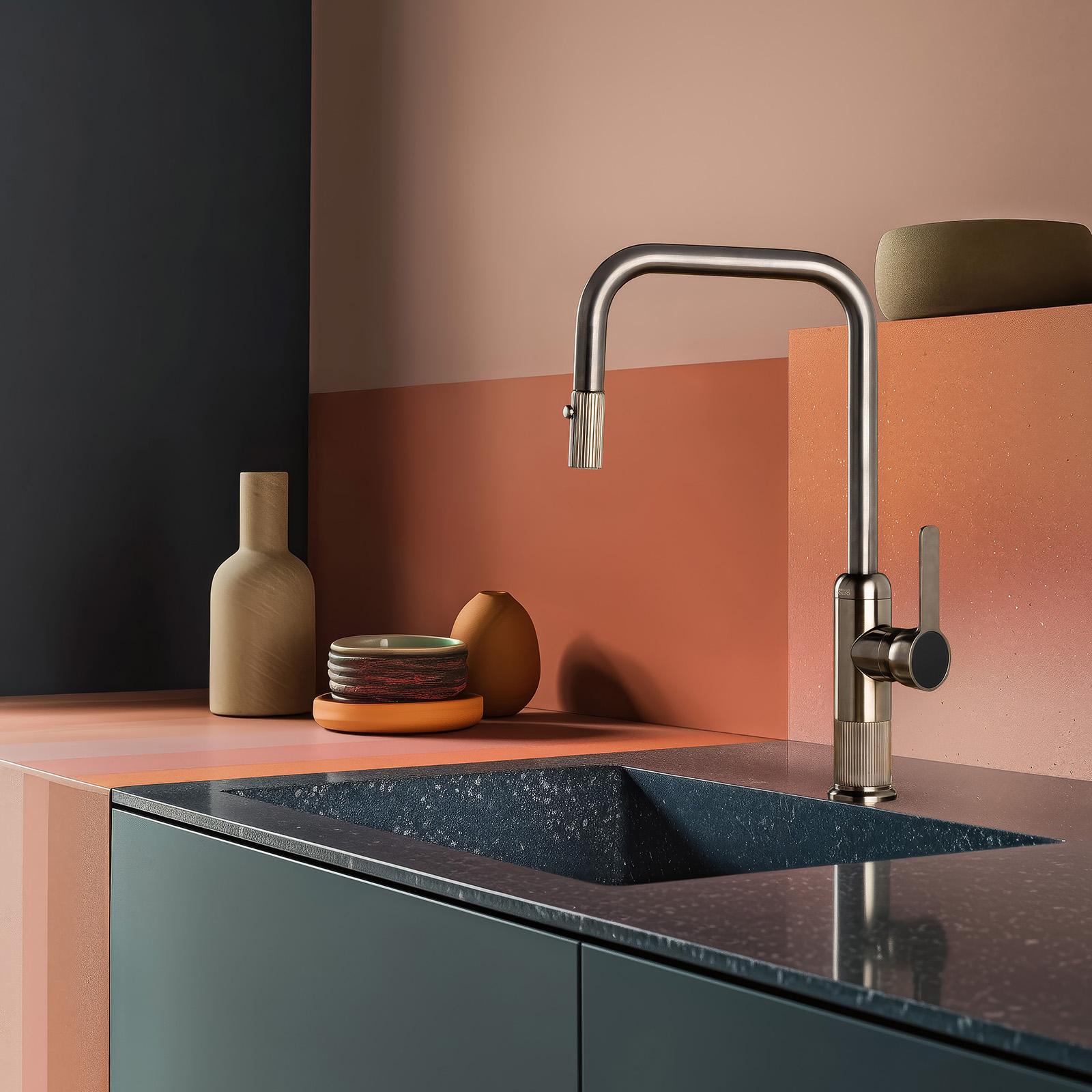
Choosing the right pull out tap for modern kitchens
The pull out tap is the fitting most people get wrong, and you only find out a year in. It is the one you touch a dozen times a day, so a weak spray, a short reach or a head that will not sit back in the spout turns into a daily irritation long after the renovation gloss has worn off. Spend the money on the right one and you stop thinking about it.
Looks sell taps. Function keeps them. The decisions that matter are the spray, the reach over the bowl, the spout height and what the body is built from, and almost none of that shows on a showroom shelf. This guide takes you through what to check before you buy, so the mixer suits your sink, your bench and the way you work at it.
How a pull out tap actually works
The spray head sits inside the spout on a flexible hose, and a counterweight or magnet pulls it home when you let go. You draw the head out, aim the water where you want it, then drop it back. That movement is the whole point of the category, and it is why a pull out beats a fixed spout in a kitchen that gets used hard.
The feel comes down to three things: hose length, how cleanly the head returns, and the weight in your hand. A head that snaps back flush every time disappears into the routine. One that does not retract cleanly will sag within a year and start sitting crooked in the spout, and you will see it every time you walk past. The Luz Gooseneck Pull-Out Mixer Lead Free is built around a controlled return, which is exactly what keeps the daily motion feeling effortless rather than fiddly.
Get the mechanism clear in your head first. Once you know how the head moves and how it comes home, spray pattern, reach and height all fall into place around your bench.
Spray functions and why they matter
Most pull out taps give you two spray modes, and how you switch between them shapes the daily experience more than the brochure lets on. An aerated stream fills pots and rinses produce. A wider spray clears plates and knocks crud off the bowl fast. The switch should hold where you set it, not spring back the moment you let go.
Match the modes to what you actually do at the sink. Fill a lot of stockpots and the stream matters; rinse a lot of vegetables and the spray earns its keep. The 316 Gooseneck Pull Out Dual Spray Function Stainless Steel Kitchen Mixer carries both in a stainless body that takes daily use without complaint, which suits a household that swaps between the two all day. Look for even pressure on both modes, because a spray that goes weak when you switch is a tap you will resent.
- A steady stream for filling pots, kettles and jugs
- A wider spray for rinsing vegetables and clearing plates
- A button or lever that holds the mode instead of springing back
- Even pressure across both modes, so neither feels weak
The best spray system is the one you stop noticing. Get the modes and the switch right and the tap fades into the background and does its job.
Matching reach and spout height to your sink
Reach and spout height are the two numbers people skip, and the two that frustrate them later. Reach is how far the spout carries the water over the bowl. Height is the clearance underneath. Either of them wrong and a beautifully made tap still feels awkward at the bench, especially over a big single bowl or a deep sink where a short spout leaves you washing in a corner.
A tall gooseneck gives you the headroom to wash baking trays and fill tall jugs, which is why it works over a deep single bowl. A lower, compact spout suits a window behind the sink, or a double bowl where the head needs to reach both sides. Pair a generous single bowl with a taller mixer, and on a split layout choose a head that pulls out far enough to cover each side.
Measure the sink and the space above it before you buy. Watch the window, the splashback and any overhead cupboard. A few centimetres of reach or clearance is the difference between a tap that feels generous and one that fights you every time you stand there.
Lead-free construction and water quality
Lead-free build is not marketing. It is what sits between the supply and the glass you pour. The water running through the tap touches what you drink and cook with, so the metals inside the body and cartridge matter more than the finish on the outside. For a kitchen you plan to keep, lead-free is the baseline now, not a premium upsell.
You cannot see any of this once the tap is installed, so look for clear lead-free credentials before you buy. The Lucia Sidelever Mixer with Pull Out Lead Free is built around it, pairing a pull out head with internals chosen for cleaner water. Abey’s guide to kitchen mixer selection sets out how to read those credentials when you compare models.
It is a quiet decision you will never watch working. It just shapes every glass you pour from that tap for the next decade.
Choosing a finish that endures
Finish is where most people start and where it belongs last, once the function is locked in. The job of a finish is simple: wear well, shrug off water spots and fingerprints, and sit comfortably next to your handles, appliances and sink. You want something that still reads well in ten years, not a colour that dates with the season.
Brushed and matte surfaces hide marks far better than high gloss, which shows every fingerprint around a busy sink. Stainless and gunmetal carry an architectural, hard-wearing quality, and warmer tones soften a scheme. A finish like this anchors a kitchen without shouting for attention, and echoing that finish in the fittings further along the bench pulls the whole run together.
Pick a finish you can live with day to day, then hold it against the rest of the room. A tap that talks to its surroundings always looks more deliberate than one chosen on its own.
Bringing the tap and sink together
A pull out tap rarely works alone. It comes good when you choose it alongside the sink, the bench depth and the way you stand at the wash zone. Matching the mixer to the bowl is what turns two decent products into one working area that actually flows.
Deep single bowls want a taller mixer with a long reach. Double bowls want a head that pulls out far enough to serve both sides without you leaning across. Materials count too, so a stainless mixer sits naturally with a stainless sink, and Abey’s range spans Gareth Ashton, Schock, Armando Vicario, Chambord and Barazza, which means a coherent pairing is on the table across most styles. Abey’s guide to choosing a kitchen sink helps you settle the bowl first, and that narrows the mixer choice a long way.
Choose the two together and the whole zone resolves. The reach lands where you need it, the finishes agree, and the small daily annoyances never get a chance to stack up. Watch a hose that drips inside the cabinet, too, because a slow leak rots the base of the unit over time.
Making the choice you will not think about again
Work through it in order: understand the mechanism, then weigh spray function, reach, spout height and lead-free build, and only then settle the finish against the sink you have or plan to fit. Each call narrows the next, and the right model tends to surface on its own.
That is the tap you wanted at the start: the one you touch a dozen times a day and never think about. Buy it as a long-term fitting rather than a quick refresh and it feels right on day one and stays dependable for years, long after the renovation is done.