How to design kitchens for entertaining and social living
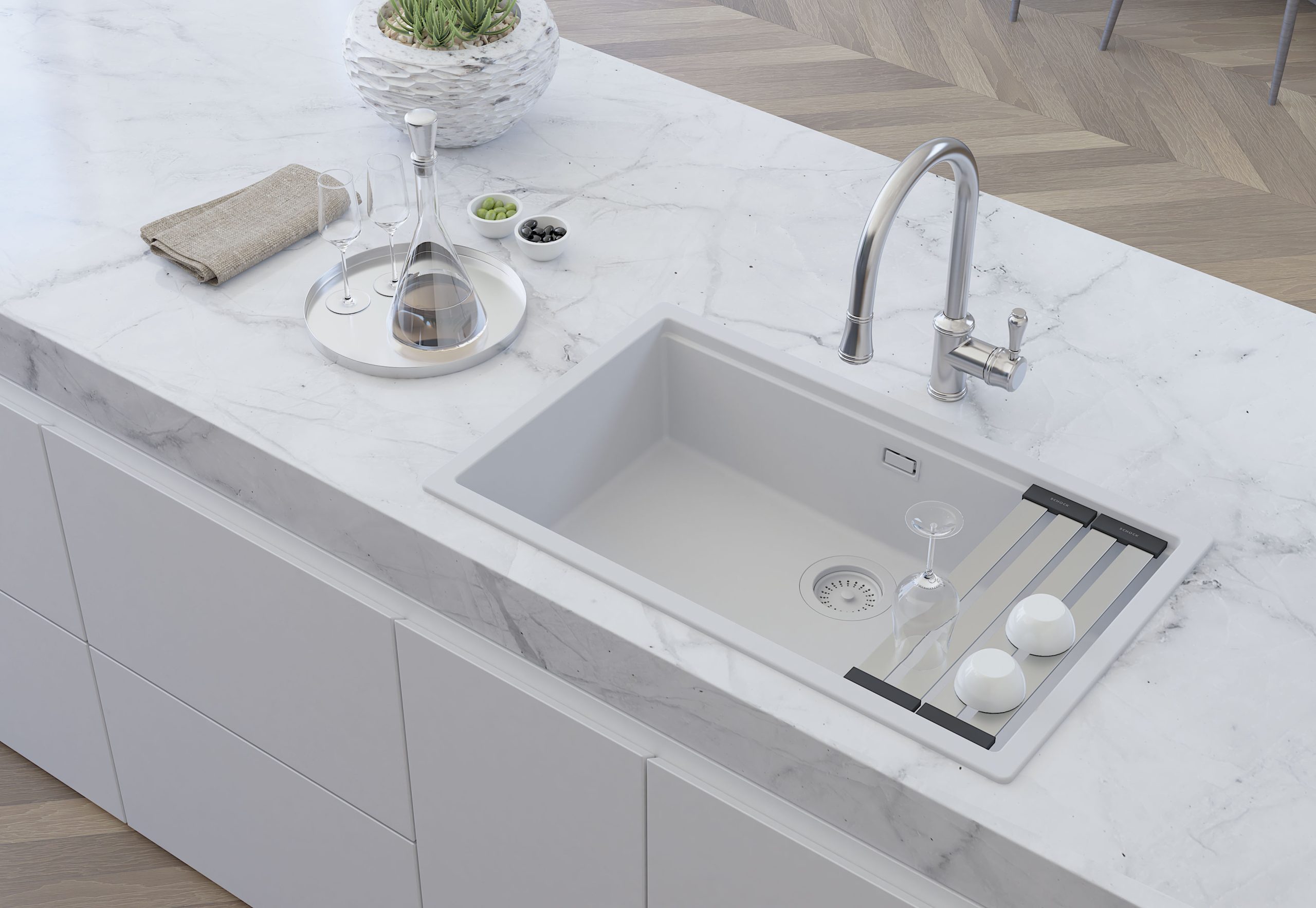
A kitchen built for one cook working alone is a very different brief to a kitchen built for a household that entertains regularly. The second version needs to absorb multiple people moving through the space at once, without the sink, bench and tapware becoming the pinch point that stalls the whole gathering.
Designing for entertaining is less about adding features and more about anticipating where people will congregate, what they will want to help with and how the fixtures at the centre of the room can support several tasks happening at once rather than one at a time.
Design the sink for shared use, not solo prep
A single small bowl works well for one person cooking alone but becomes a bottleneck the moment guests are helping with drinks, rinsing glasses or clearing plates while you are still prepping food. A larger single bowl, such as the Schock Kiruna Extra Large Single Bowl in Day (white), gives enough room for two tasks to happen in the same sink without one interrupting the other. Abey’s range of kitchen sinks lets you compare bowl dimensions directly if you are still deciding on scale.
Where space allows, a double bowl configuration like the Alfresco Double Bowl Sink separates food prep from drink and glassware duties entirely, which matters more than most people expect once a gathering is underway and several people are reaching for the tap.
Think about the worst-case moment of a gathering, the point where dessert plates, wine glasses and serving dishes all need attention within a few minutes of each other, and size the sink for that moment rather than the quiet stretch before guests arrive.
The right sink size for entertaining is almost always larger than the size that feels necessary for everyday solo cooking. Plan for your busiest night, not your average one, and the sink will rarely feel like the limiting factor again. Abey’s guide to how to maximise storage without compromising kitchen design is a useful next read if you are still planning the rest of the layout.
Position the island as the social hub
An island bench is where guests naturally gather, which means the sink and tapware on or near it need to accommodate conversation, not just cooking. A tap with generous reach lets you fill glasses or rinse produce while facing your guests rather than turning your back on the room to reach a fixed spout.
Keep bin access, prep space and the sink close enough together that you are not constantly walking around guests seated at the island to move between them. A social kitchen still needs an efficient workflow. It just has an audience watching.
Seating height and overhang at the island also affect how comfortably guests can linger near the sink without being in the way of active prep. A generous overhang gives people somewhere to sit that is close to the action without crowding the person actually cooking.
Leave clear bench space adjacent to the sink specifically for guests to set down glasses or help with small tasks, rather than giving the whole island over to your own prep.
Choose tapware that supports multiple simultaneous tasks
Dual function tapware earns its keep during entertaining more than at any other time, since you are frequently switching between filling glasses, rinsing produce and clearing dishes in quick succession, sometimes with a guest’s hands also in the sink. Reach and spray flexibility matter more here than in a single-cook kitchen.
Consider finish resilience too. A mixer handled by multiple guests over the course of an evening, sometimes with wet or greasy hands, needs a finish that stays looking presentable under contact it would not see during a typical solo weeknight.
A kitchen mixer chosen with entertaining in mind reduces the number of times you are waiting for the sink to be free during a gathering, which is a small thing that becomes noticeable the moment it is missing.
- Reach that covers the full width of a larger bowl
- A spray function suited to quick glass and produce rinsing
- A finish that is forgiving of frequent, varied use
- Enough clearance for filling tall jugs or carafes
Build in fast reset points
Entertaining generates a faster cycle of dirty glasses, plates and utensils than everyday cooking, so the kitchen needs a way to reset quickly without a full clean-up between courses or drink rounds. A dish rack positioned near the sink, such as the Stainless Steel Dish Rack DR006, gives you somewhere immediate to place rinsed items rather than letting them stack on the bench.
A colander that sits within the bowl, like the Universal Stainless Steel Colander, is a small addition that becomes useful when you need to quickly drain or rinse something between hosting duties rather than mid-recipe with guests waiting.
These small additions matter more during entertaining than everyday cooking, because the tempo is faster and there is less tolerance for a workflow that requires your full attention to execute correctly. Abey’s guide to choosing a kitchen sink based on household size and usage is a useful companion read for households that host often.
Keep the mess zone separate from the social zone
If your layout allows for it, a secondary prep or clean-up zone away from the main island keeps the social hub clear of the visible mess that accumulates during a gathering. This does not need to be a full second kitchen. Even a butler’s pantry with a compact secondary sink changes the experience significantly.
The goal is to let the island stay presentable for as long as possible, with the clean-up happening somewhere guests are not watching.
This separation also gives the host a break during a long gathering, a place to step back, reset a tray or catch up on dishes without leaving the main room entirely or interrupting the flow of conversation.
Consider your entertaining style honestly when deciding whether this is worth the space. A household that entertains often will get more value from a separated mess zone than one that hosts only occasionally through the year.
A kitchen that hosts as well as it cooks
Designing for entertaining is not a separate discipline from designing for daily cooking. It is an extension of the same thinking applied to a higher-tempo, multi-person scenario. The sink, tapware and bench layout that work well for one person working alone need enough extra capacity to absorb several people at once without anyone waiting on anyone else.
Get the scale of your sink right, position tapware to support conversation rather than interrupt it, and build in quick reset points, and the kitchen will host as comfortably as it cooks. That is a better test of a kitchen’s design than how it looks empty.
Browse Abey’s kitchen range online, or see sinks and tapware in person at an Abey showroom in Melbourne, Sydney, Brisbane or Perth.