The role of tapware in defining your kitchen aesthetic
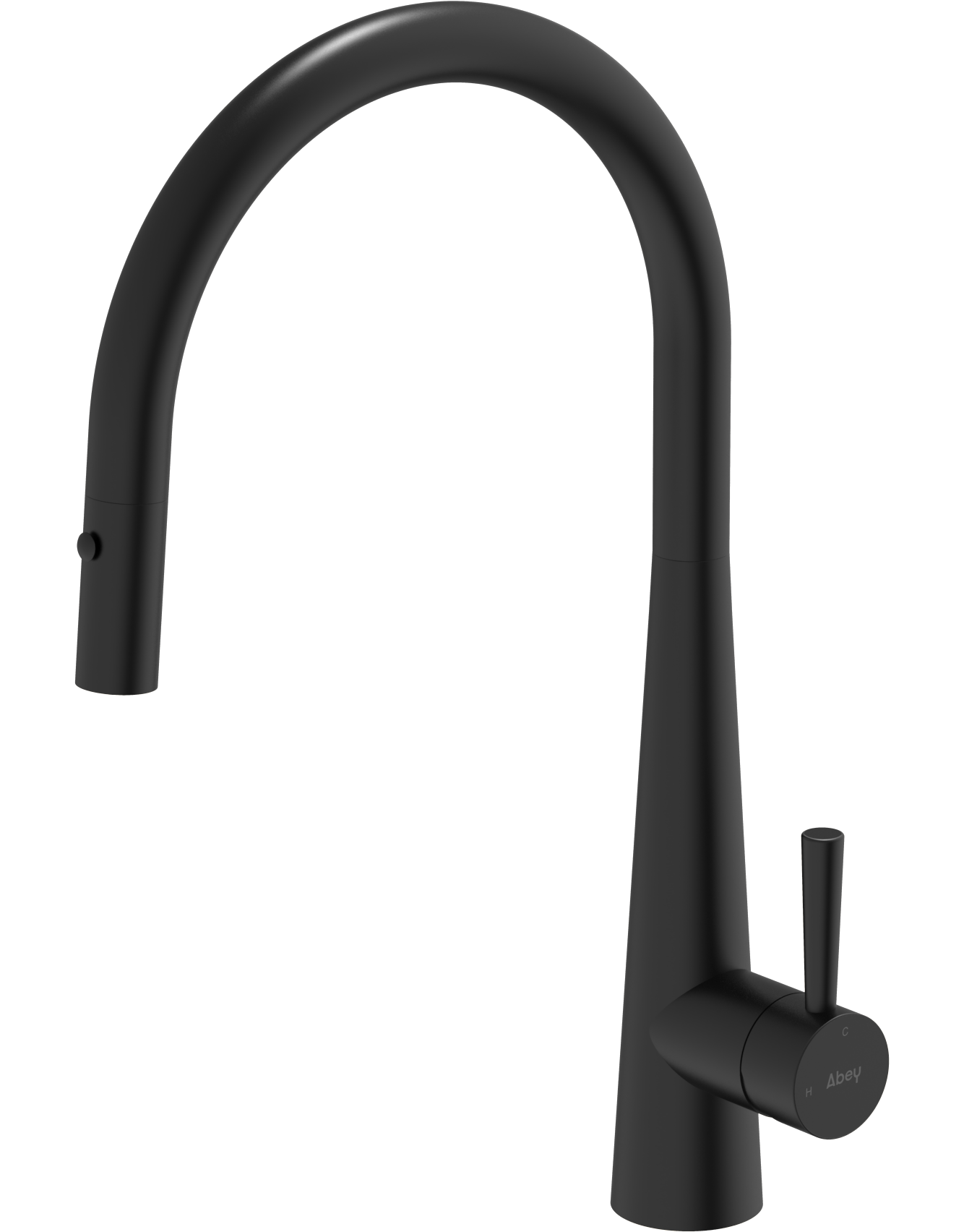
Cabinetry sets the overall tone of a kitchen, but tapware is what most people notice up close. It sits at eye level on the benchtop, catches the light and is handled more often than any other fixture in the room, which makes its shape and finish disproportionately influential on how the whole kitchen reads.
The right tapware does not just complement a kitchen style. It can define it. A single mixer, chosen well, can shift a space from utilitarian to considered, or from generic to distinctly yours, without any other change to the room. That influence is easy to underrate until you see the difference in person.
Silhouette sets the stylistic register
The shape of a mixer communicates style before finish or material even enters the conversation. A tall, angular gooseneck reads as contemporary or industrial, while a curved, lower-profile silhouette leans traditional or transitional. A design like the 316 Gooseneck Pull Out Dual Spray Function Stainless Steel Kitchen Mixer signals a confident, modern kitchen the moment it is seen. Abey’s range of kitchen mixers is a quick way to compare silhouettes side by side.
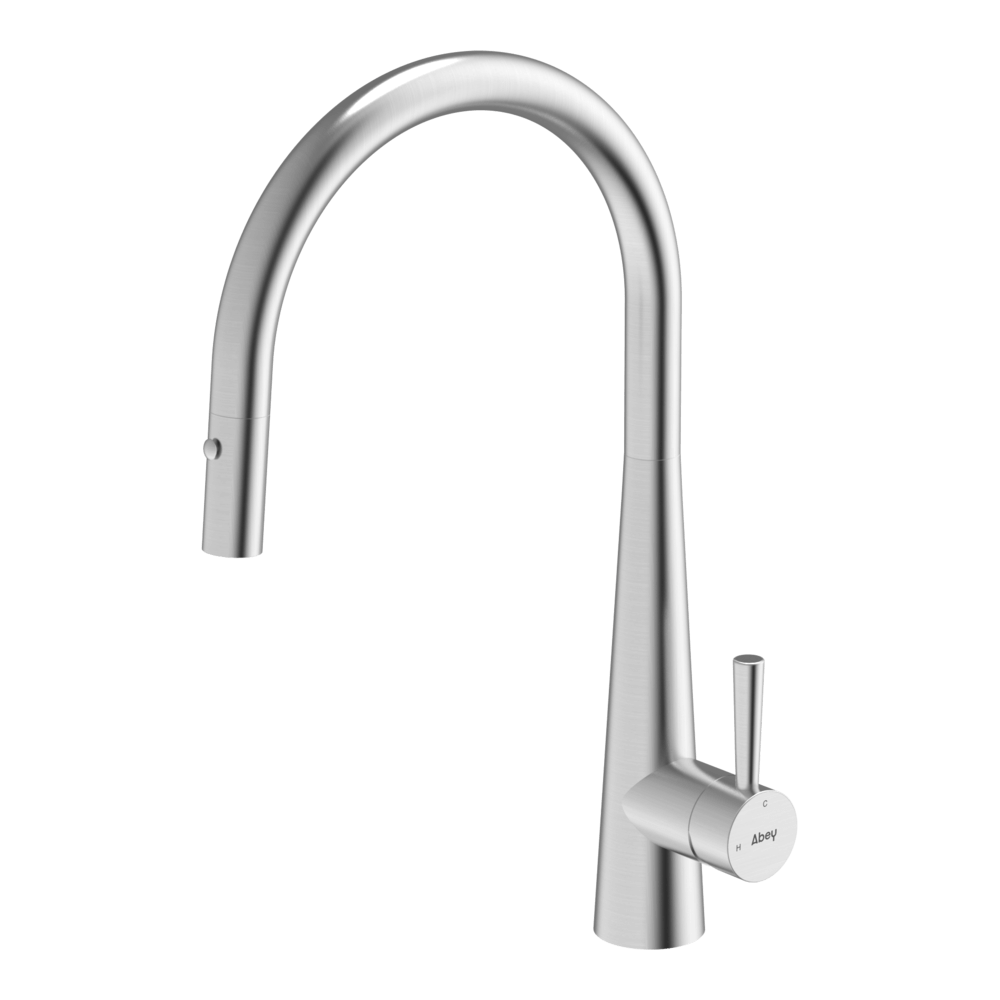
Consider silhouette against your cabinetry style before finish. A minimalist, handle-less kitchen calls for a cleaner, more architectural tap shape, while a shaker-style kitchen can carry a more traditional curved spout without looking mismatched against the surrounding joinery.
It helps to think of silhouette the way you would think of a piece of furniture rather than a fitting. A mixer with real presence can anchor a kitchen’s character the same way a statement pendant light does above an island.
The safest approach is to choose silhouette first and treat finish as the adjustable variable, since silhouette is far harder and more expensive to change later once the tap is installed and the benchtop cut around it. Abey’s guide to choosing the right pull out tap for modern kitchens looks at silhouette and function together.
Lever style is a quiet but persistent design signal
A side lever mixer, such as the Lucia Side Lever Sink Mixer, has a distinct visual language compared with a top-mounted single lever, even when both perform the same function. Side levers tend to read as considered and slightly formal, while top-mounted levers feel more compact and utilitarian by comparison.
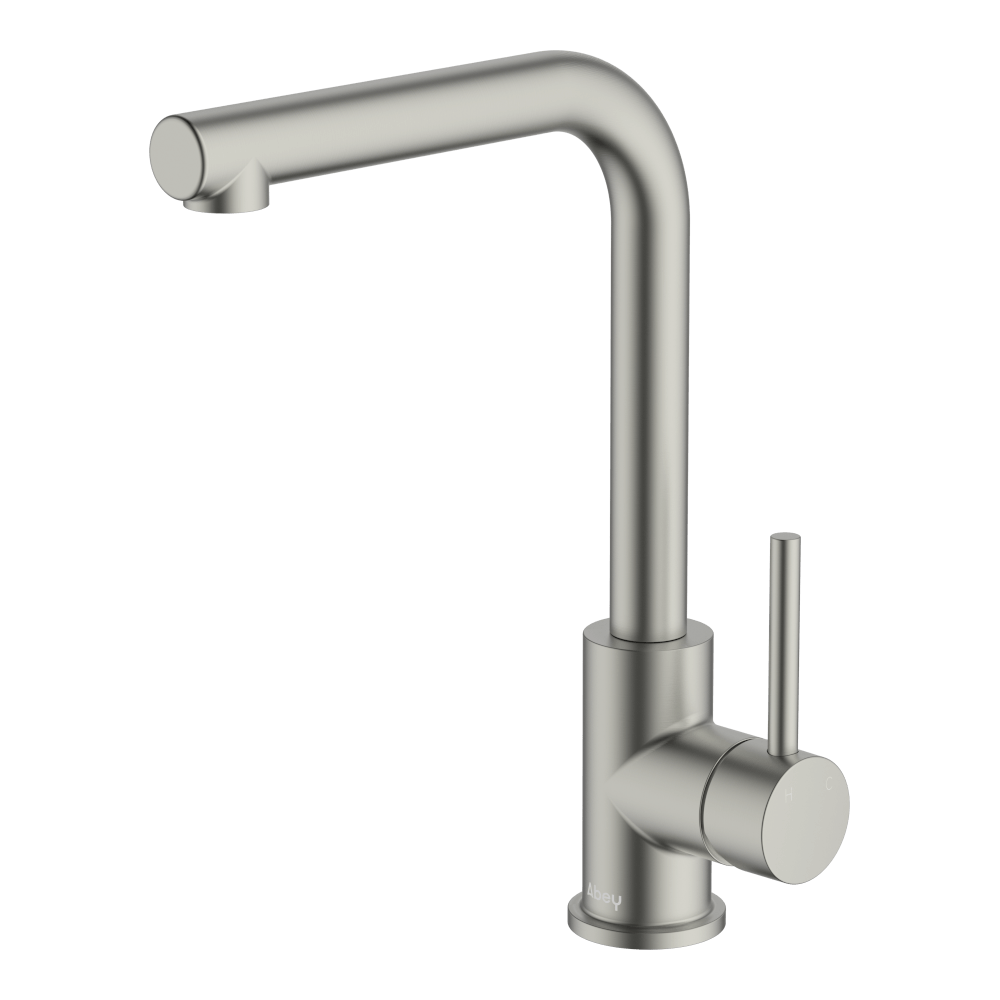
This detail is small in isolation but it is one you see and touch every time the tap is used, which means its aesthetic impact compounds over years of daily contact in a way that a splashback tile, seen rather than touched, simply does not.
Photographs of a finished kitchen rarely capture this distinction well, which is part of why lever style is so often overlooked during selection despite being one of the more tactile design decisions in the whole room.
Choose lever style with the same seriousness you would apply to a door handle or cabinet pull, since it plays a similar role in the kitchen’s overall tactile language and is judged just as closely by anyone standing at the sink.
Finish carries as much weight as shape
Once silhouette and lever style are settled, finish is where a kitchen’s aesthetic gets its final layer of definition. Brushed finishes soften a sharp silhouette and suit warmer, more textural kitchens, while polished chrome sharpens the same silhouette for a crisper, more formal look overall.
Test finish samples against your actual benchtop and cabinetry material, not against a showroom backdrop designed to flatter every option equally. The same finish can read completely differently against warm timber than it does against cool stone.
Choosing finish last, after silhouette and lever style, prevents a striking finish from being wasted on a shape that does not suit the room it is going into.
- Matte black: contemporary, high contrast, strong statement
- Brushed nickel: warm, understated, pairs with timber and stone
- Chrome: crisp, classic, reads well against white and marble
- Brushed brass: traditional or transitional, adds warmth
Designer collections offer a shortcut to a defined aesthetic
For households that want a distinctive result without assembling every decision from first principles, a designer collection can do much of the aesthetic work in a single choice. Armando Vicario’s designer mixer collection is built around distinctive silhouettes and finishes intended to function as the visual centrepiece of a kitchen, rather than blending into the background.
Abey’s own tapware range takes a related but different approach, with proportions and finishes suited to a broader range of kitchen styles, from contemporary through to more classic interiors.
The advantage of working within a single designer collection is that the silhouette, lever style and finish have already been resolved together by a design team, which removes much of the guesswork involved in coordinating three separate decisions yourself.
Reviewing a designer collection as a set, rather than product by product, is often the fastest way to identify a tapware aesthetic that feels coherent rather than assembled piece by piece over the course of a renovation. Abey’s overview of matte black, brushed nickel and chrome finishes is a useful next step once silhouette is settled.
Let tapware lead where other decisions are undecided
If cabinetry, benchtop or splashback decisions are still in flux, tapware can act as the anchor decision the rest of the kitchen is built around, rather than the final adjustment made once everything else is locked in. Choosing a distinctive mixer early gives you a fixed reference point for the finish and material choices that follow.
This approach works particularly well in renovations where the budget for cabinetry is modest but the ambition for the finished look is not. A well-chosen tap can carry more of a kitchen’s design identity than its price relative to cabinetry would suggest.
It also gives a designer or builder a concrete reference point to work from in early conversations, which tends to produce more useful advice than a vague description of a style you are still trying to define for yourself.
Treat tapware as a genuine design decision, not a functional afterthought, and it will do more work in defining the finished kitchen than almost any other single fixture in the room.
A small fixture with an outsized aesthetic role
Tapware is easy to underestimate because it is small relative to cabinetry, benchtops and splashbacks, all of which occupy more visual area in the room. But its position at eye level, its constant handling and its role as a focal point on the benchtop give it an aesthetic influence out of proportion to its size, particularly in an open plan home where the kitchen is visible from the living area.
Choose silhouette, lever style and finish deliberately, in that order, and tapware becomes one of the most efficient ways to define a kitchen’s character. It is worth deciding early rather than leaving it until the rest of the kitchen is locked in, by which point the room’s character has already been set.
To see tapware silhouettes, lever styles and finishes in person, visit an Abey showroom in Melbourne, Sydney, Brisbane or Perth, or find a stockist near you.